By Miles Sinclair
Updated November 2026
The Secura stainless steel French press is a 50-ounce, double-walled insulated press built around 304-grade stainless steel and a filter screen system that comes with two extra screens. It is aimed at people who make coffee for a group, want a press that keeps coffee warm longer than glass, and prefer not to deal with breakable parts. This review looks at what the listing states, how the design is likely to perform based on those specifications and common owner feedback patterns, and who will get the most from it. It is a research-based review, not a report from hands-on testing.
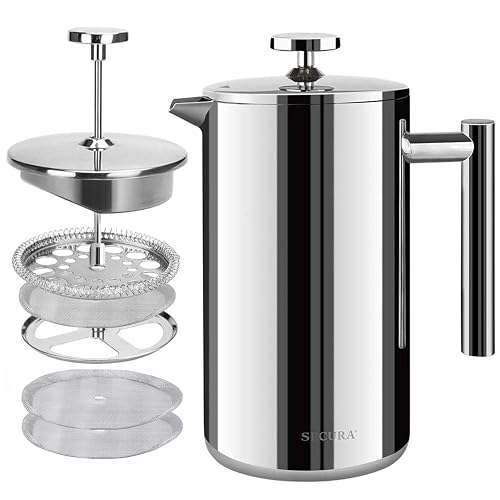
Secura French Press Coffee Maker, 304 Grade Stainless Steel Insulated Coffee Press with 2 Extra Screens, 50oz (1.5 Litre), Silver
Product Overview
The Secura French Press Coffee Maker is listed as a silver, 304-grade stainless steel insulated press with a 50-ounce (1.5-liter) capacity. The name also states that it includes two extra screens, which gives you spare filter components alongside the main one. Stainless steel construction and double-wall insulation are the core selling points. Instead of glass, the carafe body is metal, so it resists breakage and does not hold onto heat the way a thin glass beaker can lose it.
The product sits in the everyday-use category of French presses. It is not a specialty brewer or a cold-brew-only vessel. If you already know the basics of immersion brewing, the Secura will feel familiar. If you are new to the method, the steps are straightforward and the main variables are grind size, coffee-to-water ratio, steep time, and how cleanly you separate the grounds. For a deeper look, Best French Press Coffee Makers covers this in detail.
Key Features & Specifications
The table below lists only the specifications stated in the product name. Where the listing is silent, we have not filled in the gap with guesses.
| Feature | Details |
|---|---|
| Brand | Secura |
| Product type | French press coffee maker |
| Body material | 304-grade stainless steel |
| Construction | Insulated (double-wall) |
| Capacity | 50 oz (1.5 liters) |
| Included filter screens | Main screen plus 2 extra screens |
| Color | Silver |
Grade 304 stainless steel is a widely used food-contact alloy, and manufacturers generally specify it for kitchen equipment because it resists corrosion and does not react with acidic coffee the way some lower-grade metals can. Double-wall insulation typically means a vacuum or air gap between two layers of steel, which slows heat loss from the brewed coffee. Check the product packaging or manual for details on whether the insulation is vacuum-sealed, since that affects how long coffee stays warm.
For a 50-ounce press, the capacity translates to roughly six to seven standard 8-ounce cups, though actual yield depends on how much coffee grounds and water you use and how much you pour off. At a common starting point of about 1:15 to 1:17 coffee to water by weight, a full 1.5-liter batch needs roughly 90 to 100 grams of coarsely ground coffee.
Pros & Cons
Pros
- Stainless steel body resists breakage, which matters in busy kitchens, offices, and households with children.
- Double-wall insulation is designed to keep brewed coffee hot longer than a glass carafe.
- Large 50-ounce capacity suits brewing for two to four people in one batch.
- Two extra screens are included, so you have spares if one wears out or clogs.
- Food-grade 304 steel does not impart flavor and is generally easy to clean.
Cons
- Opaque metal means you cannot watch the steep or check coffee color during brewing.
- Stainless steel presses can make it harder to judge when the coffee has reached the right strength, so a timer is important.
- Large capacity is more than most solo drinkers need and can leave stale coffee if you do not finish a batch.
- Finer mesh screens can allow sediment through if the grind is too fine or the plunge is rushed.
Performance Analysis
Performance in a French press comes down to three things: how well the coffee is extracted, how well it is separated from the grounds, and how well it holds temperature after brewing. The Secura’s specifications speak most directly to the third point, and owner feedback patterns for insulated stainless presses generally focus on heat retention and durability.
Heat Retention
Double-wall insulated stainless steel presses are typically reported to keep coffee noticeably warmer for longer than single-wall glass, especially in the first 30 to 60 minutes after brewing. This is useful if you pour over an extended period, such as for a breakfast table or a small meeting. Heat retention is not the same as keeping coffee hot indefinitely, and coffee left in any press will continue to change in flavor as it sits.
Extraction and Filtration
Extraction is controlled by your technique more than by the vessel. Use a coarse grind, about the texture of coarse sea salt, with water just off the boil, around 200 to 205°F (93 to 96°C). Steep for four minutes, then press slowly and steadily. The mesh screen determines how much fine sediment reaches your cup. Owners of stainless presses commonly report a cleaner cup with coarse grounds and a gentle plunge. Those who grind too fine often report gritty coffee regardless of the brand.
For more on dialing this in, see how to use a French press: grind, steep, plunge and proper grind for French press coffee.
Durability and Cleaning
Stainless construction removes the risk of cracking that comes with glass. Owners of metal presses commonly mention that the body is easy to wipe down, and that the included spare screens make routine maintenance simpler. Screens should be rinsed promptly after each use to prevent oil buildup, which can affect flavor and filtration over time. Manufacturers generally advise hand washing for stainless presses and avoiding abrasive pads that can mark the finish.
Limitations
The main trade-off is visibility. A glass press lets you see the bloom and the steep. A stainless press hides that process, so timing becomes more dependent on a clock than on sight. Capacity is another consideration: a 50-ounce press is excellent for groups but can be oversized for one or two cups a day.
Who Should Buy This Product?
The Secura is a good fit if you regularly brew for several people, want a press that stays warm through a longer morning, or need something durable for a shared kitchen or workplace. It also suits anyone who has broken glass presses before and wants a sturdier option without changing their brewing method.
You should skip this press if you usually brew one or two cups, prefer to watch your coffee steep, or want a compact press for travel. In those cases, a smaller glass or double-wall model with a lower capacity will be easier to manage and less likely to leave coffee sitting too long.
Buying Guide
Before buying any French press, consider capacity, material, insulation, and the filter system. Match capacity to how many cups you actually drink in a typical session rather than the largest number you might ever need. Stainless steel is durable and retains heat well, while glass offers visibility and a more traditional feel. Look for a screen that is fine enough to hold back sediment but not so fine that it clogs quickly.
Here are three well-known alternatives worth comparing:
- Veken Thickened Glass Stainless Steel Brewer, 34 oz French Press Coffee Maker – a smaller-capacity option with a thickened glass and stainless steel build, suited to individuals or couples who want a compact press.

VekenThickened Glass Stainless Steel Brewer, Cold Brew Pot for Kitchen,Travel,Camping,Tea,Gifts,Bar Accessories, Decor,Dark Pewter 34oz French Press Coffee Maker, No Plastic Touching Cafe,1 L Cafetera
- Veken Heat Resistant Thickened Borosilicate Glass Stainless Steel Brewer, 34 oz French Press Coffee Maker – a similar 34-ounce press with a heat-resistant borosilicate glass body, appealing if you prefer seeing the brew while still wanting a sturdy frame.

VekenHeat Resistant Thickened Borosilicate Glass Stainless Steel Brewer, Cold Brew Pot for Kitchen,Travel,Camping,Tea,Gifts,Silver 34oz French Press Coffee Maker, No Plastic Touching Cafe,1 L Cafetera
If you want more options before deciding, our guides to the best French press for home use and cold brew French press models compare a wider range of designs.
FAQ
Is the Secura stainless steel French press good for coarse grind coffee?
Yes. The press is designed for immersion brewing, and coarse grinds are the standard recommendation for any French press. Coarse grounds separate more cleanly through the mesh screen and reduce sediment in the cup. For guidance on grind texture, see our step-by-step grind guide.
How much coffee should I use in a 50-ounce press?
A common starting ratio is about 1:15 to 1:17 coffee to water by weight. For a full 1.5-liter batch, that means roughly 90 to 100 grams of coarsely ground coffee. Adjust to taste by changing the grind, steep time, or ratio in small steps.
How long should I steep coffee in this press?
Four minutes is a widely used starting point. Shorter steeps can taste sour or weak, while longer steeps can increase bitterness. Because the body is opaque, set a timer rather than relying on color.
Does the double-wall insulation keep coffee hot all day?
Insulation slows heat loss, so coffee stays warm longer than in a single-wall vessel. It will still cool over time and continue to change flavor. For best results, decant leftover coffee into a separate thermal carafe if you want to keep it warm for an extended period.
Are the extra screens included with the press?
The product name states that two extra screens are included. Check the packaging or manual to confirm what ships in the box and how to replace the filter assembly.
How do I clean a stainless steel French press?
Empty the grounds, rinse the carafe, and wash the parts with warm water and mild dish soap. Clean the screen thoroughly to remove oils. Avoid abrasive scrubbers that can scratch the finish. Many owners of stainless presses report that a quick rinse after each use prevents buildup.
Is a stainless steel press better than glass?
It depends on your priorities. Stainless steel is more durable and generally retains heat better, while glass lets you see the brewing process. Neither material changes the fundamentals of French press brewing, which are grind, ratio, water temperature, and steep time. For a broader comparison, see our French press coffee ratio guide.
Final Verdict
The Secura stainless steel French press is a practical choice for anyone who brews in larger batches and wants a durable, insulated press that keeps coffee warm longer than glass. Its 50-ounce capacity, stainless construction, and included spare screens make it well suited to households, offices, and anyone who has broken a glass press before. The main drawbacks are that you cannot watch the steep and that the capacity is more than most solo drinkers need.
If your coffee habits match that profile, this press is worth a close look. If you brew one or two cups at a time or prefer visual control over the brew, one of the smaller alternatives may serve you better. In either case, the results depend more on grind size, ratio, and steep time than on the vessel alone.
Related reading
- Top 7 French Press Cold Press Coffee Makers Compared (2026)
- Top 6 French Press Coarse Grind Coffees Compared (2026)
- Top 6 Coarse Ground Coffees for French Press Compared (2026)
- Proper Grind for French Press Coffee: A Step-by-Step Guide
- How to Use a French Press: Grind, Steep, Plunge
- How to Make French Press Coffee: 8 Steps to a Better Cup
About Miles Sinclair
Miles Sinclair is part of our editorial team and reviews and edits our coffee beans & brewing methods guides, checking product details against manufacturer specifications and owner feedback.