By Miles Sinclair
Updated November 2026
If you want to learn how to use a coffee pour over, the good news is that the method is simple: hot water, ground coffee, a filter and gravity. The harder part is choosing the right equipment and dialing in your variables. This guide covers six pour-over options, compared on the criteria that matter most to home brewers: build quality, filter type, capacity, ease of cleaning, and how well each one suits a beginner who wants consistent results without a steep learning curve. Each pick is based on manufacturer specifications and the patterns owners commonly report, not on our own hands-on testing.
Our top picks at a glance
- 1
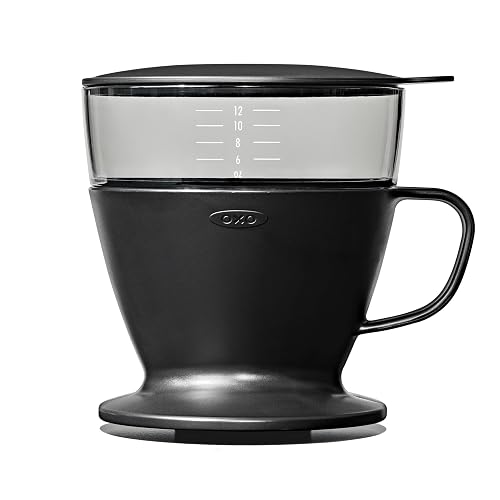 TOP CHOICEBest overallOXO Brew Pour Over with Water TankView on Amazon
- 2
 TOP CHOICEBest for small kitchensLHS Pour Over Coffee Dripper Stainless SteelView on Amazon
- 3
 TOP CHOICEBest for travelDisposable Non-Woven Pour Over Pouches, 50 CountView on Amazon
- 4
 Best budget pickMelitta 52 oz. Pour-Over Coffee Brewer with Glass Carafe, BlackView on Amazon
- 5
 Best for cleaner cupsMongdio Double-mesh Design Dripper, Reusable Metal Coffee Filter with HandleView on Amazon
- 6
 Best for familiesMISETTO Pour Over Coffee Dripper, Stainless Steel Filter with Removable CupView on Amazon
Our Top Picks
Quick Comparison
| Product | Best for | Key feature |
|---|---|---|
| OXO Brew Pour Over with Water Tank | Best overall | Built-in water tank for steady flow |
| LHS Pour Over Coffee Dripper Stainless Steel | Best for small kitchens | Compact 1–2 cup cone with stand |
| Disposable Non-Woven Pour Over Pouches | Best for travel | Single-serve, no cleanup |
| Melitta 52 oz. Pour-Over Coffee Brewer | Best budget pick | Glass carafe with paper filters |
| Mongdio Double-mesh Design Dripper | Best for cleaner cups | Double-mesh metal filter |
| MISETTO Pour Over Coffee Dripper | Best for families | Removable cup, multi-serve capacity |
OXO Brew Pour Over with Water Tank
OXO Brew Pour Over with Water Tank — Pour Over Coffee Maker OXO Brew Pour Over Coffee Maker with Water Tank — Matte Black
Best for: Best overall
This suits home brewers who want a self-contained setup and a steady flow of water without managing a kettle pour in real time. It is a good fit for people who are still building their pouring technique.
Key specs
- Pour-over brewer with integrated water tank
- Matte black finish
Pros
- Built-in water tank helps keep the flow rate more consistent
- Simple, single-piece operation for everyday brewing
- Matte finish resists fingerprints
Cons
- Larger footprint than a basic cone dripper
- Requires filling and monitoring the tank
Bottom line: A strong first pick for someone who wants the most forgiving, repeatable setup for daily brewing at home.
LHS Pour Over Coffee Dripper Stainless Steel
LHS Pour Over Coffee Dripper Stainless Steel Coffee Filter Metal Cone Filter Paperless Reusable Coffee Filter Single Cup Coffee Maker 1-2 Cup With Non-slip Cup Stand and Cleaning Brush
Best for: Best for small kitchens
This is aimed at solo drinkers or couples with limited counter space who want a single-cup or two-cup brewer that stores easily.
Key specs
- Serves 1–2 cups
- Stainless steel metal cone filter
- Includes non-slip cup stand and cleaning brush
Pros
- Compact footprint
- Reusable metal filter avoids paper waste
- Cup stand helps keep the dripper steady
Cons
- Limited capacity for larger batches
- Metal filters allow more fine sediment than paper
Bottom line: Best for people who brew one or two cups at a time and want a small, low-waste setup.
Disposable Non-Woven Pour Over Pouches, 50 Count
Disposable, Portable Single Serve, Non-Woven Pour Over Pouches, For Travel, Camping, Office & Home Hanging Ear Coffee Filter Bags, 50 Count
Best for: Best for travel
These are for people who want pour-over flavor on the road, at the office, or while camping, without carrying a dripper and filters.
Key specs
- Single-serve hanging-ear pouches
- Non-woven material
- Pack of 50
Pros
- No cleanup required
- Easy to pack and carry
- Works with any cup or mug that fits the ears
Cons
- Recurring cost per cup and more waste than reusable filters
- Less control over brew variables than a full dripper setup
Bottom line: A practical choice for travel and occasional brewing rather than a daily home setup.
Melitta 52 oz. Pour-Over Coffee Brewer with Glass Carafe, Black
Melitta 52 oz. Pour-Over Coffee Brewer with Glass Carafe, Black
Best for: Best budget pick
This suits households that brew multiple cups at once and want a familiar, low-maintenance machine-style pour-over with a glass carafe.
Key specs
- 52 oz. capacity
- Glass carafe
- Uses paper cone filters
Pros
- Larger capacity for sharing
- Paper filters are inexpensive and widely available
- Easy for beginners to use
Cons
- Glass carafe is fragile
- Less control over water flow than a manual pour
Bottom line: A sensible budget pick for families or anyone who wants a larger batch with minimal fuss.
Mongdio Double-mesh Design Dripper, Reusable Metal Coffee Filter with Handle
Double-mesh Design Dripper, Reusable Metal Coffee Filter with Handle, Pour Over Coffee Dripper for Home, 1-4 Cups Mongdio Pour Over Coffee Maker, Stainless Steel Pour Over Coffee Filter
Best for: Best for cleaner cups
This is for brewers who prefer reusable filtration and want a cup with less sediment than a single-mesh metal filter typically gives.
Key specs
- Double-mesh metal filter
- Handle for pouring and lifting
- Designed for 1–4 cups
Pros
- Double mesh is designed to reduce fine particles in the cup
- Reusable, so no ongoing filter purchases
- Handle makes it easier to manage while pouring
Cons
- Double mesh can slow drawdown with very fine grinds
- Needs thorough rinsing to avoid residual oils
Bottom line: A good choice for someone who wants a cleaner-tasting metal-filter cup without paper.
MISETTO Pour Over Coffee Dripper, Stainless Steel Filter with Removable Cup
Pour Over Coffee Dripper, MISETTO Stainless Steel Filter,Easy to Clean Paperless pour over coffee maker,Reusable Filter,Cone Dripper with Removable Cup
Best for: Best for families
This suits people who brew for two or more and want a dripper that doubles as a serving setup with a removable cup.
Key specs
- Stainless steel reusable filter
- Removable cup
- Cone dripper design
Pros
- Removable cup simplifies serving and cleaning
- Paperless operation
- Good for sharing a batch
Cons
- Metal filter requires more rinsing than paper
- Pour technique matters more for even extraction
Bottom line: A solid pick for households that want reusable filtration and easy serving.
Buying Guide
Capacity and cup count
Match the brewer to how many cups you usually make. Single-cup and 1–2 cup drippers are easiest to dial in, because water and coffee quantities are easy to control. Larger brewers are convenient for sharing but make it harder to keep the bed of coffee evenly saturated.
Good picks for this: LHS Pour Over Coffee Dripper Stainless Steel, Melitta 52 oz. Pour-Over Coffee Brewer
Filter type: paper, metal or disposable
Paper filters absorb more oils and fine particles, which usually gives a cleaner, brighter cup. Metal filters pass more oils and sediment, adding body but sometimes a muddier finish. Disposable pouches trade some control for convenience.
Good picks for this: Mongdio Double-mesh Design Dripper, Disposable Non-Woven Pour Over Pouches
Flow control and water tank design
A steady, even flow is one of the biggest factors in an even extraction. Brewers with an integrated water reservoir can help you maintain a consistent water level, which makes it easier to repeat a brew. Manual pours from a gooseneck kettle give you more control, but take practice.
Good picks for this: OXO Brew Pour Over with Water Tank, MISETTO Pour Over Coffee Dripper
Size and counter fit
Measure the space under your cabinets or on your counter before buying. A cone dripper with a cup stand takes up little room, while a carafe-style brewer needs clearance for the carafe and lid.
Good picks for this: LHS Pour Over Coffee Dripper Stainless Steel, OXO Brew Pour Over with Water Tank
Durability and materials
Stainless steel is durable and resists staining, though it can be dented by a hard drop. Glass carafes are attractive and let you see the brew, but break more easily. Check whether the filter and seams are easy to access for cleaning, since residue can build up in tight spaces.
Good picks for this: Mongdio Double-mesh Design Dripper, Melitta 52 oz. Pour-Over Coffee Brewer
Ease of cleaning
Brewers you will use every day should be quick to rinse. Look for designs with few crevices and a removable cup or filter. Owners frequently report that thorough rinsing after each use prevents stale, oily off-flavors from carrying into the next brew.
Good picks for this: MISETTO Pour Over Coffee Dripper, LHS Pour Over Coffee Dripper Stainless Steel
Use case: home, office or travel
Home brewers benefit from reusable hardware and larger capacities. Office or travel use favors single-serve pouches or compact drippers that pack easily. Decide where you will brew most often before choosing.
Good picks for this: Disposable Non-Woven Pour Over Pouches, OXO Brew Pour Over with Water Tank
FAQ
How do you use a coffee pour over step by step?
Heat water to roughly 195–205°F (90–96°C). Place a filter in the dripper, rinse it with hot water to remove paper taste and preheat the vessel, then discard the rinse water. Add medium-fine ground coffee, usually about 1:15 to 1:17 coffee to water by weight. Bloom with a small amount of water for 30–45 seconds, then pour in slow, steady circles until your target weight is reached. Let it drain fully.
What grind size should I use for pour over?
Use a medium-fine grind, similar to table salt. Finer grinds slow the drawdown and can taste bitter, while coarser grinds can taste sour and thin. Adjust one variable at a time.
How much coffee should I use for pour over?
A common starting point is 15 to 17 grams of coffee for every 250 grams of water, which is roughly a 1:15 to 1:17 ratio. Weighing both coffee and water gives the most repeatable results.
What water temperature is best for pour over?
Most brewers start between 195°F and 205°F (90°C to 96°C). Lighter roasts often respond well to the higher end, while darker roasts can taste harsher at very high temperatures.
Do I need a scale to make pour over coffee?
A scale is not strictly required, but it makes the method far more consistent. Measuring by volume with scoops can vary a lot from brew to brew, especially with different bean densities and grind sizes.
Why does my pour over taste bitter or sour?
Bitterness usually points to over-extraction, often from a grind that is too fine, water that is too hot, or a brew that drains too slowly. Sourness usually points to under-extraction, often from a grind that is too coarse, water that is too cool, or a pour that is too fast. Change one variable at a time and taste after each adjustment.
Is a pour-over brewer hard for beginners?
The method has a learning curve, but a beginner can get good results quickly by using a scale, a timer and a consistent grind. Brewers with a water tank or a removable cup can make the process more forgiving while you build your technique.
Can I use pour over coffee filters with metal brewers?
Most metal drippers are designed for reusable metal filters and do not need paper. You can use paper filters in many cone drippers, but check the dripper’s design first. Paper gives a cleaner cup, while metal allows more oils and fine particles through.
Conclusion
If you want the most forgiving setup for daily home use, the OXO Brew Pour Over with Water Tank is a strong starting point. Small-kitchen and solo drinkers will likely prefer the compact LHS Pour Over Coffee Dripper. Travelers and occasional brewers can use the disposable pouches for convenience, while the Melitta 52 oz. brewer is a sensible budget pick for sharing. If you prefer reusable filtration with a cleaner cup, the Mongdio double-mesh dripper fits well, and the MISETTO model is a good choice for households that serve several people. Whichever you choose, the fundamentals stay the same: weigh your coffee, keep your ratio and temperature steady, and adjust one variable at a time.
Sources
- Food safety guidance on handling, storing and preparing food and beverages at home (fda.gov)
- Standards and certification information for food-contact materials and kitchen equipment (nsf.org)
- Nutrition and food-quality resources for home preparation and storage (usda.gov)
Related reading
- Pour Over Coffee Grams: How Much Coffee to Use for a Balanced Cup
- Pour Over Coffee Filter Holder: How to Choose and Use One (Step-by-Step)
- Temperature for Pour Over Coffee: The Right Range and How to Dial It In
- Pour-Over Coffee Ratio Calculator: How to Get the Right Brew Every Time
About Miles Sinclair
Miles Sinclair is part of our editorial team and reviews and edits our coffee beans & brewing methods guides, checking product details against manufacturer specifications and owner feedback.