By Miles Sinclair
Updated November 2026
Grinding coffee for pour over comes down to one goal: a medium-fine, even grind that lets water extract flavor at a steady pace. Get the size right and your cup tastes sweet and balanced. Get it wrong and you’ll see either sour, thin coffee or bitter, muddy coffee. This guide covers the target grind, how to dial it in, and the mistakes that trip up most home brewers.
What Grind Size Works Best for Pour Over
For most pour-over drippers, aim for a grind about the texture of coarse sand or table salt. It should be finer than what you’d use for a French press but noticeably coarser than espresso. A good starting point is a ratio of 1:16, or 16 grams of water for every gram of coffee, with a brew time of roughly 2:30 to 3:30.
Shopping for one? See our guide: 7 Best Pour Over Coffee Dripper Models for Home Brewers (2026).
Because every dripper and bean behaves differently, treat this as a starting point. Your job is to adjust from there based on what the cup tastes like.
How to Grind Coffee for Pour Over Step by Step
- Weigh your beans first. Use 15 to 20 grams for a single 10 to 12 ounce cup.
- Set your grinder to a medium-fine setting. On a burr grinder, start near the middle of the range and move one or two clicks at a time.
- Grind only what you need. Pre-ground coffee loses aroma quickly, so grind right before brewing.
- Check the grounds. Rub a pinch between your fingers. They should feel like fine sand, not powder, and should not be chunky.
- Brew and taste. If the cup is sour and thin, grind finer. If it’s bitter, dry, or harsh, grind coarser.
Dialing In Your Grind for Flavor
Taste is your best diagnostic tool. Under-extraction usually shows up as sour, sharp, or hollow flavors, and the fix is a finer grind or a slightly longer brew. Over-extraction shows up as bitter, ashy, or drying flavors, and the fix is a coarser grind or a shorter brew.
Make one change at a time. If you adjust grind size, keep water temperature and ratio the same so you can tell what caused the difference. For temperature guidance, see Water Temperature for Pour Over Coffee once you’ve settled your grind.
Choosing a Grinder for Consistent Results
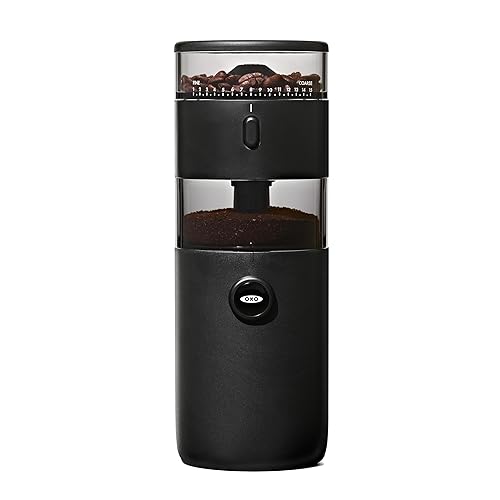
Consistency matters more than almost anything else in pour over. Blade grinders chop beans unevenly, producing fines that over-extract and boulders that under-extract at the same time. A burr grinder crushes beans between two surfaces at a set distance, which gives a far more uniform particle size. Hand-crank burr grinders and electric flat-burr models are both common choices for home brewers.
If you’re still learning, a grinder with clearly numbered settings makes it much easier to repeat a good cup. For a broader look at brewing gear, see Coffee Brewers Compared: Drip, Pour-Over, Press and More.
Common Mistakes
- Grinding too far ahead of brewing, which dulls aroma within minutes.
- Changing grind and water temperature at the same time, which makes results impossible to read.
- Using a blade grinder and expecting even extraction.
- Judging the grind only by eye instead of tasting the result.
- Ignoring the bed of coffee: a very fine grind can slow the drawdown and stall the brew.
Recommended Gear
- Burr grinder: A burr grinder gives the uniform particles pour over needs, so flavors come through cleanly. View on Amazon
- Digital coffee scale: Weighing beans and water keeps your ratio repeatable from cup to cup. View on Amazon
FAQ
What grind size is best for pour over coffee?
A medium-fine grind, about the texture of coarse sand or table salt, is the usual starting point. Adjust finer if the cup tastes sour and coarser if it tastes bitter.
Can I use pre-ground coffee for pour over?
You can, but pre-ground coffee loses aroma and flavor quickly and is often ground for a different method. Grinding fresh just before brewing gives noticeably better results.
How do I know if my grind is too fine?
If the brew drains very slowly, the coffee tastes harsh, or the bed looks clogged, the grind is likely too fine. Move one or two steps coarser and try again.
Conclusion
Grinding coffee for pour over is about starting near a medium-fine setting and tuning by taste. Use a consistent burr grinder, weigh your coffee and water, and change one variable at a time. With a few brews, you’ll find the setting that makes your favorite beans taste their best.
Related reading
- Pour Over Coffee Brewing: A Step-by-Step Guide for Better Cups
- Melitta Pour Over Coffee Filters: 6 Best Picks Compared (2026)
- How to Make Pour-Over Coffee: Step by Step
- How to Make Pour Over Coffee: 6 Steps to a Clean, Sweet Cup
- How to Brew Pour Over Coffee: 6 Steps to a Better Cup
- How to Brew Pour Over Coffee at Home: A Step-by-Step Guide
Ready to choose one?
About Miles Sinclair
Miles Sinclair is part of our editorial team and reviews and edits our coffee beans & brewing methods guides, checking product details against manufacturer specifications and owner feedback.