 By Miles Sinclair
Updated November 2026
Many home brewers ask whether pour over coffee is better than drip, and the honest answer is that it depends on what you want from your cup. Pour over gives you direct control over water temperature, flow rate and contact time, which can produce a cleaner, more layered flavor. Automatic drip machines trade some of that control for convenience and consistency. The picks below were chosen by comparing manufacturer specifications, brand reputation and common owner feedback patterns, so you can match a brewer to your routine, your counter space and your taste.
Our top picks at a glance
- 1
 TOP CHOICEBest overallBodum 17oz Pour Over Coffee Maker, High-Heat Borosilicate Glass with RView on Amazon
- 2
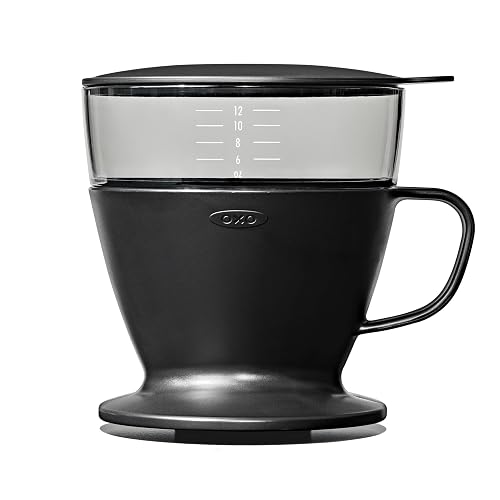 TOP CHOICEBest for built-in water tank convenienceOXO Brew Pour Over Coffee Maker with Water Tank – Matte BlackView on Amazon
- 3
 TOP CHOICEBest for reusable filter fansDouble-mesh Design Dripper, Reusable Metal Coffee Filter with Handle,View on Amazon
- 4
 Best for larger batchesChemex Pour-Over Glass Coffeemaker – Classic Series – 8-Cup – Exclusive PackagingView on Amazon
- 5
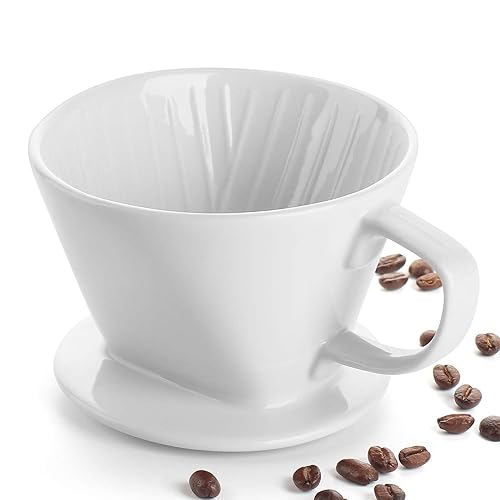 Best budget pickDOWAN Pour Over Coffee Maker, Non-Electric Pour Over Coffee Dripper, MView on Amazon
Our Top Picks
Quick Comparison
| Product | Best for | Key feature |
|---|---|---|
| Bodum 17oz Pour Over Coffee Maker | Everyday single-carafe brewing | High-heat borosilicate glass with reusable stainless steel filter |
| OXO Brew Pour Over Coffee Maker with Water Tank | Hands-off water delivery | Built-in water tank for steady pour volume |
| Mongdio Double-mesh Pour Over Dripper | Cutting down on paper filter waste | Double-mesh reusable metal filter with handle |
| Chemex Pour-Over Glass Coffeemaker 8-Cup | Brewing for a group | Classic 8-cup glass carafe with thick paper filters |
| DOWAN Pour Over Coffee Maker | Single cups on a budget | Porcelain dripper for slow, manual brewing |
Bodum 17oz Pour Over Coffee Maker, High-Heat Borosilicate Glass with Reusable Stainless Steel Filter and Cork Grip – Made in Portugal
Bodum 17oz Pour Over Coffee Maker, High-Heat Borosilicate Glass with Reusable Stainless Steel Filter and Cork Grip – Made in Portugal
Best for: Everyday single-carafe brewing with a reusable filter
This suits someone who wants to learn pour over without a lot of setup, and who likes the look of a glass carafe on the counter. Its design is aimed at people who want to brew and serve from the same vessel.
Key specs
- 17 oz capacity
- High-heat borosilicate glass body
- Reusable stainless steel filter
- Cork grip
- Made in Portugal
Pros
- Reusable stainless steel filter reduces paper waste
- Glass lets you watch the brew and check color
- Simple design with few parts to clean
Cons
- Single-carafe size is best for one or two cups
- Requires manual pouring and timing
Bottom line: A good first pour over setup for someone who wants a glass carafe and a reusable filter without extra equipment.
OXO Brew Pour Over Coffee Maker with Water Tank – Matte Black
OXO Brew Pour Over with Water Tank — Pour Over Coffee Maker OXO Brew Pour Over Coffee Maker with Water Tank — Matte Black
Best for: Hands-off water delivery for more consistent pours
This is a fit for people who find it hard to keep a steady pour and want a built-in reservoir to help manage water flow. It suits daily brewers who value repeatable results over fully manual control.
Key specs
- Built-in water tank
- Matte black finish
Pros
- Built-in tank makes pour volume easier to keep steady
- Compact footprint for a counter
- Clean, modern styling
Cons
- Less direct control over pour rate than a gooseneck kettle method
- Tank needs refilling between large batches
Bottom line: Best for drip-style convenience with a pour over brew profile, especially if you brew most mornings.
Double-mesh Design Dripper, Reusable Metal Coffee Filter with Handle, Pour Over Coffee Dripper for Home, 1-4 Cups Mongdio Pour Over Coffee Maker, Stainless Steel Pour Over Coffee Filter
Double-mesh Design Dripper, Reusable Metal Coffee Filter with Handle, Pour Over Coffee Dripper for Home, 1-4 Cups Mongdio Pour Over Coffee Maker, Stainless Steel Pour Over Coffee Filter
Best for: Reusable filter fans who want to skip paper filters
This suits people who prefer a metal filter and want to cut down on consumables. It works well for brewers who already own a server or mug and want an affordable dripper.
Key specs
- Double-mesh stainless steel filter
- Handle for lifting and pouring
- Listed for 1–4 cups
Pros
- Reusable filter removes the need for paper
- Handle makes it easy to hold over a mug
- Works with a range of cup sizes
Cons
- Metal mesh lets more fine sediment through than paper, so cup can taste heavier
- Needs a separate server or mug
Bottom line: A practical dripper for anyone who wants a reusable pour over setup on a budget and does not mind a fuller-bodied cup.
Chemex Pour-Over Glass Coffeemaker – Classic Series – 8-Cup – Exclusive Packaging
Chemex Pour-Over Glass Coffeemaker – Classic Series – 8-Cup – Exclusive Packaging
Best for: Brewing larger batches for a group
The Chemex is a long-standing design in specialty coffee. It suits households or small gatherings that want several cups from one brew, and anyone who likes a clean, tea-like cup.
Key specs
- 8-cup capacity
- Glass carafe with wooden collar
- Uses thick, bonded paper filters
Pros
- Thick filters tend to produce a clean, bright cup
- Large capacity for multiple servings
- Iconic design that many brewers display on the counter
Cons
- Requires specific paper filters for best results
- Larger footprint and slower to brew a single cup
Bottom line: Pick this if you regularly brew for several people and want a classic pour over vessel with a clean finish.
DOWAN Pour Over Coffee Maker, Non-Electric Pour Over Coffee Dripper, Manual Brew Maker, Single Cups Porcelain Slow Brewing Accessories for Gifts, White
DOWAN Pour Over Coffee Maker, Non-Electric Pour Over Coffee Dripper, Manual Brew Maker, Single Cups Porcelain Slow Brewing Accessories for Gifts,White
Best for: Single cups on a budget
This is a simple, non-electric porcelain dripper for one cup at a time. It suits beginners, gift buyers, or anyone who wants a low-commitment way to try pour over.
Key specs
- Non-electric manual design
- Porcelain construction
- Single-cup size
Pros
- Simple to use with no power required
- Porcelain holds heat well during the brew
- Easy to clean
Cons
- Single-cup capacity only
- Porcelain is more fragile than glass or metal
Bottom line: A good entry point for one person who wants to learn pour over without a big investment.
Buying Guide
Brewing Control and Flow
Pour over rewards steady, controlled water flow. Drip machines handle this for you, which is convenient but harder to adjust. If you want to experiment with bloom time and pour pattern, look for a dripper with a wide enough cone to let water flow evenly. For practical steps, see Pour Over Coffee Brewing: A Step-by-Step Guide for Better Cups.
Good picks for this: Bodum 17oz Pour Over Coffee Maker, Chemex Pour-Over Glass Coffeemaker You may also like Copper Cow Pour Over Coffee: 7 Best Picks Compared (2026).
Filter Type: Paper vs. Reusable Metal
Paper filters trap more oils and fine particles, which generally gives a cleaner, lighter cup. Metal filters let more oils through, which can add body but also some sediment. Choose based on whether you prefer clarity or fuller texture. Grind size interacts with filter type, so check Coffee Grind Size for Pour Over: A Step-by-Step Guide for Better Flavor when switching.
Good picks for this: Mongdio Double-mesh Pour Over Dripper, Chemex Pour-Over Glass Coffeemaker
Capacity and Fit for Your Routine
Think about how many cups you brew at once. Single-cup drippers suit one person, while larger carafes suit households. A brewer that is too large for your typical batch can make it harder to maintain a good coffee-to-water ratio. For guidance, see V60 Coffee to Water Ratio: A Step-by-Step Guide for Better Pour-Overs.
Good picks for this: DOWAN Pour Over Coffee Maker, OXO Brew Pour Over Coffee Maker with Water Tank
Material and Durability
Borosilicate glass handles heat well and is easy to inspect, but it can break if dropped. Porcelain holds heat nicely but is more fragile. Stainless steel is durable and resists breakage. Match the material to how you use and store your brewer.
Good picks for this: Bodum 17oz Pour Over Coffee Maker, DOWAN Pour Over Coffee Maker
Water Temperature Control
Water temperature has a large effect on extraction. Many brewers aim for a range near 200–205°F, but the right number depends on the roast. Manual pour over lets you adjust this directly, while automatic machines fix it for you. Read Water Temperature for Pour Over Coffee: 200–205°F for Balanced Flavor for more detail.
Good picks for this: OXO Brew Pour Over Coffee Maker with Water Tank, Bodum 17oz Pour Over Coffee Maker
Cleaning and Care
Brewers with fewer parts are quicker to clean. Glass and porcelain are simple to rinse, while reusable filters need regular rinsing to prevent oil buildup and off flavors. Plan to wash your brewer after each use.
Good picks for this: Mongdio Double-mesh Pour Over Dripper, Bodum 17oz Pour Over Coffee Maker
Grind Size Compatibility
Pour over typically uses a medium-fine grind, and the dripper design affects how grind size performs. Cone shape and filter type both change flow speed. If your coffee tastes sour or thin, grind adjustments may help more than changing the brewer. See What Grind Coffee for Pour Over: A Step-by-Step Guide to Better Flavor.
Good picks for this: Chemex Pour-Over Glass Coffeemaker, DOWAN Pour Over Coffee Maker
FAQ
Is pour over coffee actually better than drip?
Pour over often produces a cleaner, more adjustable cup because you control water temperature, pour pattern and timing. Drip is more consistent with less effort. Neither is universally better; the right choice depends on whether you value control or convenience.
Does pour over taste stronger than drip?
Not necessarily. Strength depends mostly on your coffee-to-water ratio and grind size, not the method alone. Pour over can taste brighter and lighter, while drip can taste heavier, but both can be adjusted.
What grind size should I use for pour over?
A medium-fine grind is a common starting point, similar to fine sand. Adjust finer if the cup tastes sour and coarser if it tastes bitter. Check Pour Over Coffee Grind: A Step-by-Step Guide for Better Flavor for a fuller process.
Do I need a gooseneck kettle for pour over?
A gooseneck kettle makes controlled pouring easier, but it is not strictly required. A standard kettle works if you pour slowly and steadily. Consistent flow matters more than the kettle shape.
Is the water temperature important for pour over?
Yes. Many brewers start around 200–205°F. Water that is too cool can under-extract and taste sour, while water that is too hot can over-extract and taste bitter. Adjust based on the roast and your taste.
Why does my pour over taste bitter?
Bitterness often comes from over-extraction, which can be caused by a grind that is too fine, water that is too hot or a brew time that is too long. Review Why Is My Pour Over Coffee Bitter: 5 Causes and Fixes for a Smoother Cup for common fixes.
Is a reusable filter as good as paper?
Paper filters generally produce a cleaner cup with less sediment, while reusable metal filters allow more oils and fine particles through. Both can make good coffee, so choose based on the texture you prefer and whether you want to reduce waste.
Conclusion
So, is pour over coffee better than drip? It can be, if you want control over flavor and enjoy the process. Drip machines remain the better choice for speed and consistency. If you want a glass carafe and reusable filter, the Bodum 17oz is a strong starting point. For hands-off water flow, the OXO Brew with Water Tank suits daily routines. The Mongdio dripper fits reusable-filter fans, the Chemex serves groups well, and the DOWAN is a simple budget option for single cups. Match the brewer to how many cups you make and how much control you want.
Sources
- Food safety guidance for handling and storing brewed beverages and equipment hygiene (fda.gov)
- Nutrition and food composition information relevant to coffee and beverage preparation (usda.gov)
- Specialty Coffee Association resources on brewing standards and extraction
About Miles Sinclair
Miles Sinclair is part of our editorial team and reviews and edits our coffee beans & brewing methods guides, checking product details against manufacturer specifications and owner feedback.