By Miles Sinclair
Updated November 2026
Cold brew coffee decaf can be just as smooth and rich as regular cold brew, but decaf beans often taste flat, woody, or harsh if you brew them the same way. The fix usually comes down to bean quality, grind size, the coffee-to-water ratio, and steep time. Adjust those four things and decaf cold brew tastes noticeably better.
Why Decaf Cold Brew Often Tastes Different
Decaffeination removes caffeine from green beans before roasting, and the most common methods use water, solvents, or carbon dioxide. Each process can strip out some of the sugars and aromatic compounds that give coffee its body and sweetness. Many decaf beans also start as lower-grade lots, so they have less to work with from the start.
Shopping for one? See our guide: Cold Brew vs Iced Coffee (2026): Which Is Better for You?.
Cold brew adds its own twist. Because it extracts slowly in cold water, it pulls out fewer acids and bitter compounds than hot brewing, which is why it tastes sweet. Decaf beans have fewer sugars to begin with, so the result can taste thin or muted unless you compensate with a stronger ratio.
Factors That Control the Flavor
Four variables matter most when you brew decaf cold brew:
- Bean freshness: Decaf beans lose aroma quickly. Look for a roast date within the past few weeks.
- Grind size: Use a coarse grind, similar to breadcrumbs. Fine grounds over-extract and turn muddy.
- Ratio: A 1:8 ratio (one part coffee to eight parts water by weight) is a common starting point. Many people go to 1:6 or 1:7 for decaf to add body.
- Steep time: Steep 14 to 18 hours at room temperature or 18 to 24 hours in the refrigerator. Longer steeps don’t always help and can add woody notes.
If you want a deeper look at timing and ratios, the guide Guide Cold Brew Recipe: Ratios, Steps and Tips for Smooth Coffee covers the basics in detail.
How to Fix a Weak or Bitter Batch
Once you know which variable is off, the fix is usually simple. A weak batch needs more coffee, while a bitter batch needs a coarser grind or a shorter steep. Taste it after 14 hours, then decide whether to keep steeping or strain.
- Weigh your beans and water on a kitchen scale for consistent results.
- Grind coarsely, or ask your roaster to grind for cold brew.
- Combine coffee and cold water in a jar or brewer, stir gently, and cover.
- Steep at room temperature for 14 to 18 hours, or refrigerate for 18 to 24 hours.
- Strain through a paper filter or fine mesh, then dilute with water or milk to taste.
For a full walkthrough of the process, see How to Make Cold Brew Coffee at Home: A Step-by-Step Guide. If you prefer a single-serve approach, Cold Brew Coffee Pouches: 6 Steps to Smooth Coffee at Home explains how steeping pouches compare.
What We’d Use
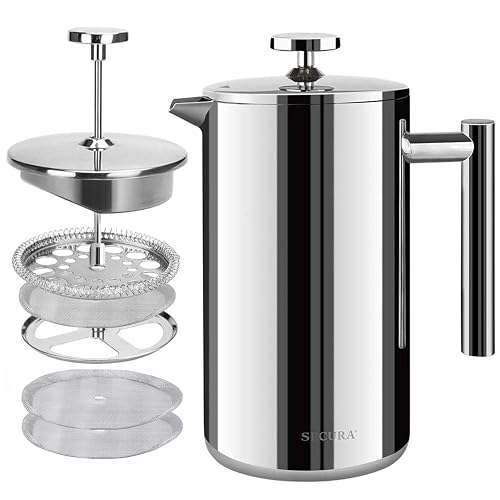
A French press is an easy tool for decaf cold brew because it lets you steep and strain in the same vessel. Look for a coarse-grind coffee bean option to keep extraction even.
Search for a glass cold brew pitcher with a fine mesh filter if you want a simple, no-fuss setup. View on Amazon
FAQ
Does decaf cold brew have caffeine?
Yes, but much less than regular cold brew. Decaf beans still retain a small amount of caffeine, so the drink isn’t fully caffeine-free.
Why does my decaf cold brew taste sour?
Sourness usually means under-extraction, often from a steep that was too short or a grind that was too coarse. Try steeping for a few more hours or using a slightly finer grind.
Can I use regular cold brew beans for decaf?
You can, but decaf beans often need a stronger ratio and slightly longer steep time to taste balanced. Start with a 1:6 ratio and adjust from there.
Related reading
- What Is Cold Brew Coffee? How It Differs From Iced Coffee
- Takeya Coffee Cold Brew: 6 Best Takeya Cold Brew Makers for Home Use
- Stumptown Coffee Roasters Cold Brew Review: Is It Worth It?
Ready to choose one?
About Miles Sinclair
Miles Sinclair is part of our editorial team and reviews and edits our coffee beans & brewing methods guides, checking product details against manufacturer specifications and owner feedback.